
Wellness starts with vision.
Wellness starts with vision.
Myopia Management for Children
Myopia management is designed to help slow the progression of nearsightedness in children and support long-term eye health as they grow.
At Roseland Optometry, we use a proactive, preventative approach to assess your child’s vision, monitor changes over time, and recommend treatment options based on their age, prescription, eye health, lifestyle, and risk factors.
What is Myopia?
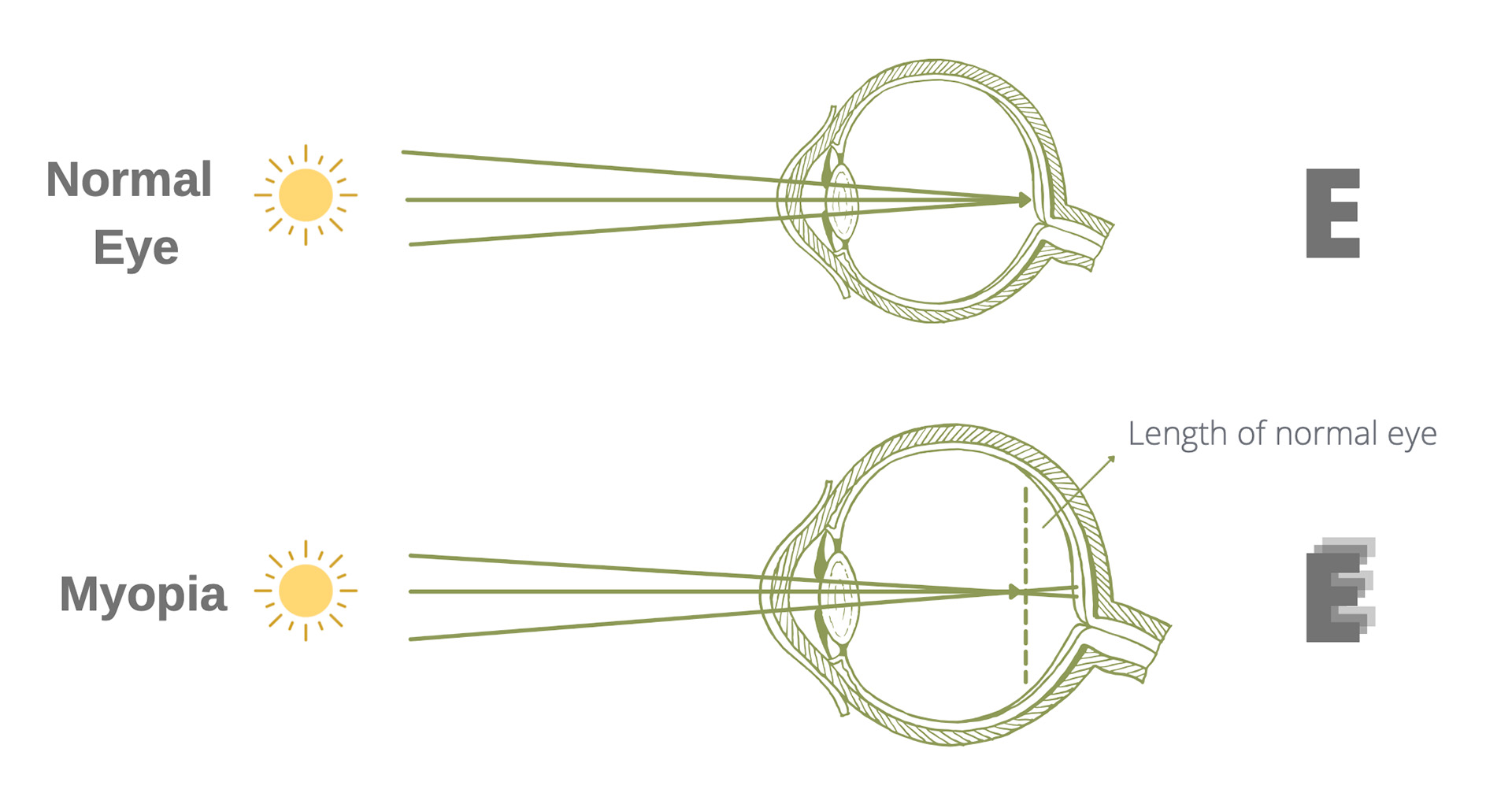
Myopia, also known as nearsightedness, is a condition where distance vision is blurry while near vision is usually clearer. It often develops in school-aged children and may continue to progress into the teenage years.
Myopia usually occurs when the eye grows too long, causing light to focus in front of the retina instead of directly on it. Myopia management focuses on slowing that progression, not just updating the glasses prescription.
Book a Myopia ConsultationWhy Myopia Progression Matters
When myopia progresses, the eye can become longer over time. Higher levels of myopia are associated with a greater lifetime risk of eye health conditions such as retinal detachment, glaucoma, cataracts, and myopic macular degeneration.
Early assessment and ongoing monitoring can help identify children who may benefit from myopia management and guide treatment before progression becomes more advanced.
Signs Your Child May Be Nearsighted
Children do not always know their vision is changing. Signs of myopia may include:
- Squinting to see the board, TV, or distant objects
- Sitting very close to screens or holding devices close
- Complaints of blurry distance vision
- Frequent headaches or tired eyes
- Difficulty seeing during sports or in the classroom
- A prescription that keeps increasing year after year

Risk Factors for Myopia Progression
Some children are more likely to develop myopia or experience faster progression. Risk factors may include:
- One or more myopic parents
- Earlier onset of nearsightedness
- Rapid prescription changes
- Significant near work or screen use
- Limited time outdoors
- Family history and ethnic background
Risk factors do not guarantee that myopia will progress quickly, but they can help guide how closely your child’s vision should be monitored.
How Myopia Management Works
Standard glasses or contact lenses can make distance vision clearer, but they do not necessarily slow the progression of myopia. Myopia management uses specific lens designs, contact lenses, lifestyle guidance, and regular monitoring to help reduce the rate of progression.
Treatment recommendations depend on your child’s prescription, age, eye health, visual demands, comfort, maturity, and risk profile. Results vary, and your optometrist will discuss realistic expectations and follow-up timing during the consultation.
Myopia Management Options

Depending on your child’s needs, treatment may include:
- Specialized myopia control eyeglass lenses
- Specialized myopia control contact lenses
- Regular prescription and eye health monitoring
- More outdoor time when possible
- Screen and near-work habit adjustments, including regular breaks
What to Expect at a Myopia Consultation
A myopia consultation helps us understand your child’s current vision, prescription history, risk factors, and lifestyle. We may review previous prescriptions, perform a comprehensive eye exam, assess eye health, and discuss treatment options that may be appropriate.
If myopia management is recommended, we will explain the treatment plan, expected follow-up schedule, and what to watch for between visits.